
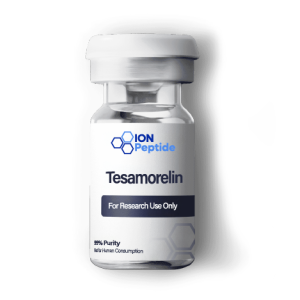
Introduction to tesamorelin
Tesamorelin is a synthetic peptide that functions as a growth hormone-releasing hormone (GHRH) analog. Its primary role is to stimulate the pituitary gland to release growth hormone (GH) in a controlled, physiologic manner. Originally developed for the treatment of HIV-associated lipodystrophy, tesamorelin has become a focus of research for its ability to enhance GH secretion while influencing metabolism, body composition, and endocrine function.
How tesamorelin Stimulates GH Secretion
Tesamorelin binds specifically to GHRH receptors on pituitary somatotrophs. This receptor activation triggers intracellular signaling pathways that increase pulsatile GH release. By mimicking natural GHRH activity, tesamorelin ensures that GH secretion remains physiologic rather than excessive, which helps minimize adverse effects. Research shows that this controlled stimulation of GH can improve both metabolic function and body composition.
Clinical Studies on GH Response to tesamorelin
Multiple clinical trials have evaluated tesamorelin’s effectiveness in enhancing GH secretion. Participants receiving tesamorelin consistently demonstrated increased GH levels and subsequent rises in insulin-like growth factor 1 (IGF-1), the primary mediator of GH’s anabolic and lipolytic effects. Studies confirm that tesamorelin improves pulsatile GH secretion without overstimulation, highlighting its safety and efficacy as a GHRH analog.
tesamorelin and Metabolic Outcomes
The impact of tesamorelin on GH secretion extends to significant metabolic benefits. Elevated GH levels induced by tesamorelin promote lipolysis, particularly in visceral adipose tissue, while maintaining lean muscle mass. Tesamorelin has also been shown to improve lipid profiles, reduce triglyceride levels, and enhance overall energy utilization. These metabolic effects are closely linked to the GH-IGF-1 axis activated by tesamorelin.
Safety and Hormonal Balance
Tesamorelin is generally well-tolerated in clinical use. Most side effects are mild and include injection-site reactions and occasional edema. Long-term studies emphasize monitoring IGF-1 levels to prevent excessive GH activity. By stimulating GH secretion in a controlled manner, tesamorelin supports hormonal balance without the risks associated with direct GH administration.
tesamorelin in Research Context
Beyond its clinical applications, tesamorelin provides valuable insights into GH physiology and endocrine signaling. Research using tesamorelin has helped elucidate how pulsatile GH secretion regulates lipid metabolism, body composition, and energy homeostasis. These studies highlight the potential of tesamorelin as a model peptide for investigating growth hormone pathways and metabolic regulation in humans.
Conclusion
Tesamorelin is a key peptide in understanding and modulating GH secretion. Research shows that tesamorelin effectively increases pulsatile GH release, leading to improvements in visceral fat reduction, lipid metabolism, and overall metabolic health. Its ability to stimulate GH in a physiologic manner while maintaining safety makes tesamorelin an important therapeutic and research tool. As studies continue, tesamorelin will remain central to exploring growth hormone pathways and their implications for metabolic and endocrine health.